A pelletizing line is chosen starting from the feedstock, not from an extruder catalog. The same extruder runs smoothly on clean film production scrap and keeps stopping for screen changes if you feed it poorly washed agricultural film. Below is the order of decisions: what to define before talking to a supplier, which units make up a line, what to look for in an extruder, and which pelletizing method suits your polymer.
What to define before choosing a pelletizing line
Four parameters set the line configuration. Until they are known, comparing quotes is pointless: each supplier will size its line on its own assumptions.
Feedstock type
Which polymer, and in what form. LDPE film and stretch film, polypropylene big-bag (FIBC) yarn and bags, and thick-walled rigid HDPE and PP waste each wash, dry and feed into the extruder differently. Himmash lines are designed for LDPE, HDPE, PP, glass-filled polyamides (PA-GF), ABS and PVC. If the feedstock is mixed, you need to know at least the approximate ratio of the fractions.
Degree of contamination
How dirty the feedstock is, and with what. Clean production scrap (trimmings, rejects, flash) can be pelletized with almost no washing. Agricultural film, the plastic fraction of municipal solid waste (MSW) and big bags that held bulk cargo carry sand, soil, organic matter and paper labels, and they need a full washing section. Himmash lines are designed for feedstock contamination of up to 50% and more, but the dirtier the feedstock, the longer the washing section and the stricter the requirements for water treatment.
Output
How many pellets per hour you need to produce. Himmash lines are available with an output of 150 to 400 kg/h of pellets. In practice, lines of up to 300 kg/h make the most sense: larger ones are usually inefficient. Calculate by pellet output, not by the weight of incoming feedstock: with heavy contamination, a significant part of the incoming mass is dirt and water that will be removed in washing.
Flakes or pellets
Which product you need at the end of the line. If the washed regrind (flakes) is sold or used in your own production, the line ends with drying and bagging. If you need pellets, the line also gets an extruder, melt filtration and degassing, and a pelletizing unit. The decision depends on the buyer: in what form they are prepared to accept the material and what requirements they set for it.
What makes up a pelletizing line for post-consumer plastics
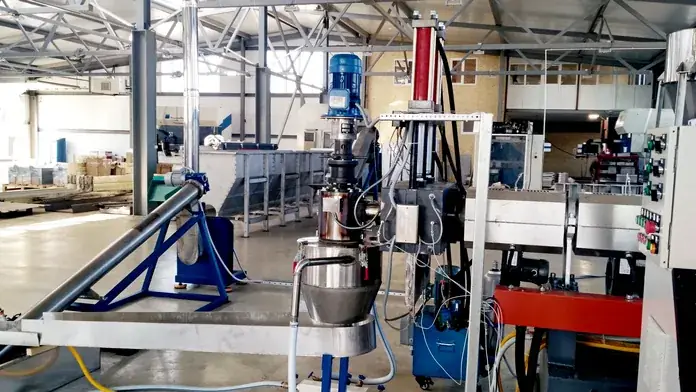
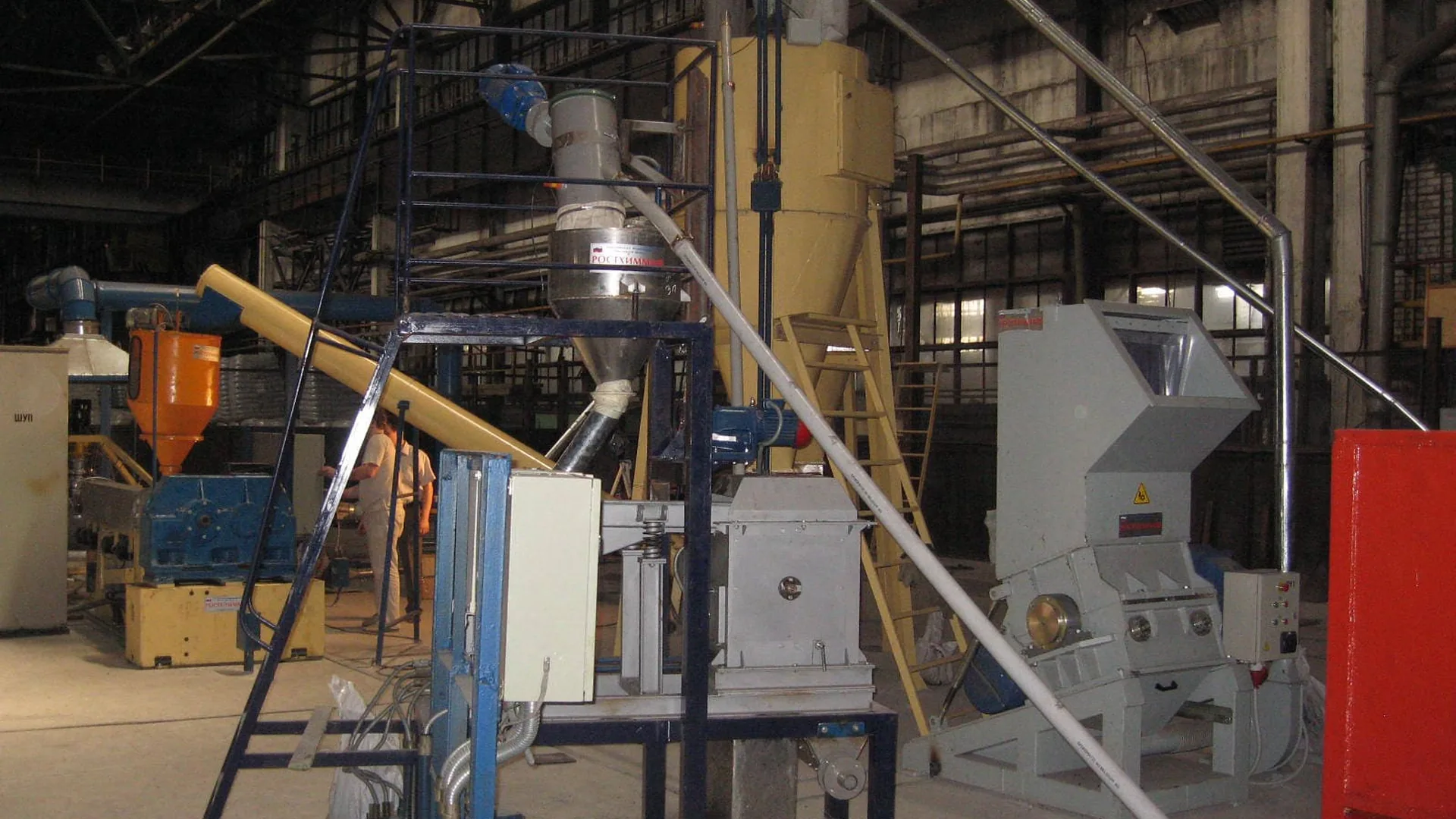
The Himmash recycling line covers the full cycle: shredding, washing, drying and pelletizing. A typical configuration looks like this:
| Stage | Equipment | Purpose |
|---|---|---|
| Shredding | shredder or crusher | reduce the feedstock to a fraction that the washer and feeder can accept |
| Primary washing | flotation washer | separate sand, stones, dirt and heavy contaminants |
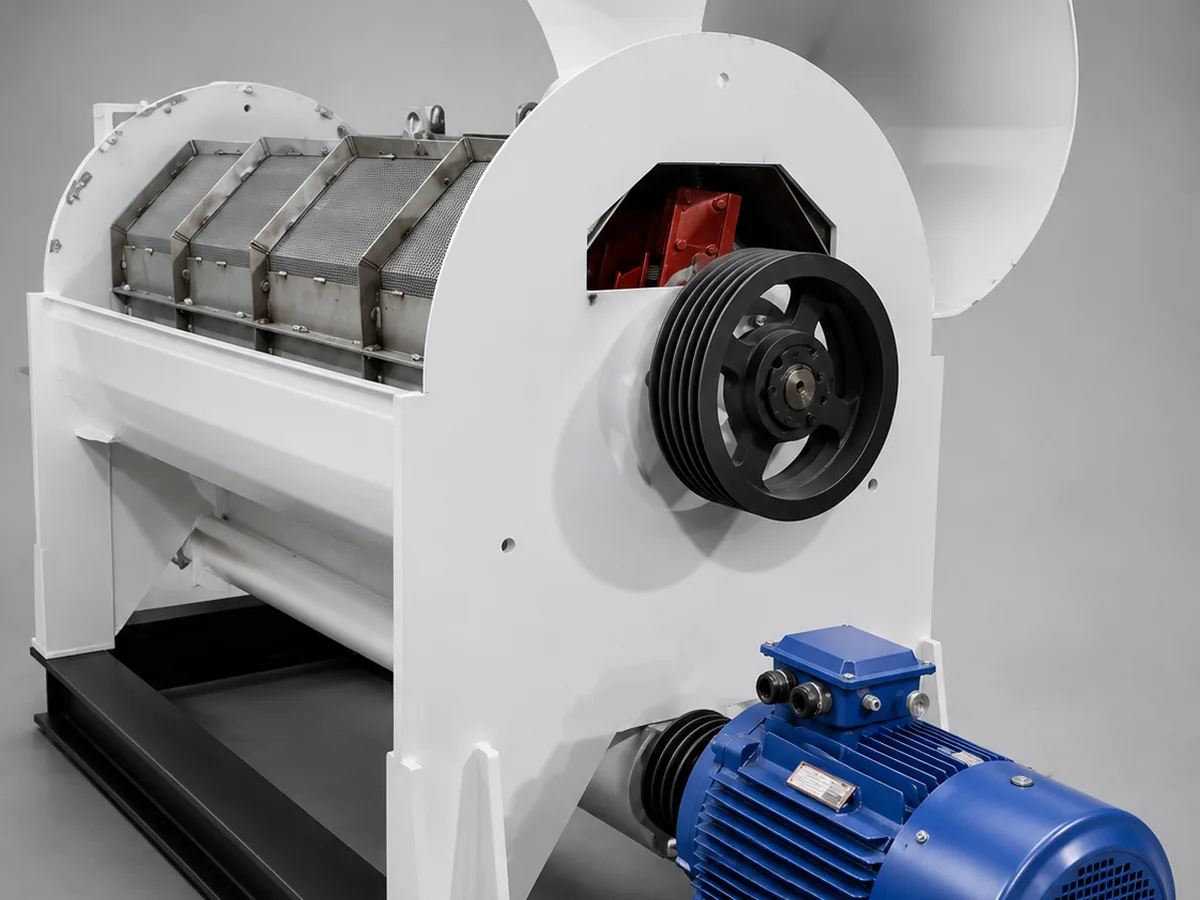
| Secondary washing | rotor-type friction washer | wash the material by friction in hot water with detergents |
| Dewatering | dewatering centrifuge | reduce moisture to 3–5% |
| Drying | drum dryer for rigid plastics, vertical gravity dryer for film and yarn | remove the remaining moisture |
| Feeding | storage hopper, screw feeder | feed the extruder evenly, and feed film without agglomeration |
| Extrusion | extruder with melt degassing and filtration | melt, clean and homogenize the polymer |
| Pelletizing | water-ring pelletizing head or strand pelletizing head | cut the pellets |
| Water treatment | closed-loop water treatment system | reuse the wash water up to 20 times |
This is a typical composition: the set and order of washing units are chosen for the specific feedstock, and the line configuration is fixed in the project specification.
How to choose an extruder for recycled feedstock
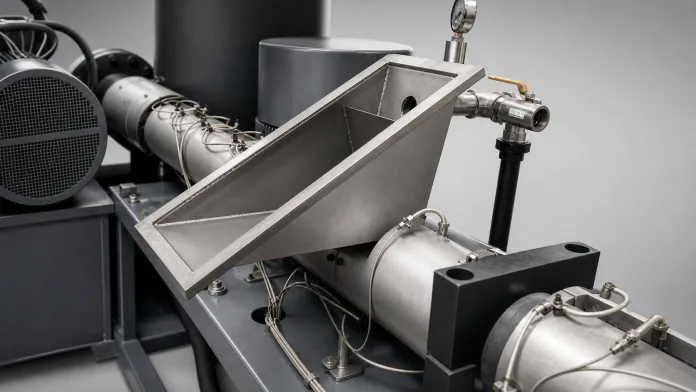
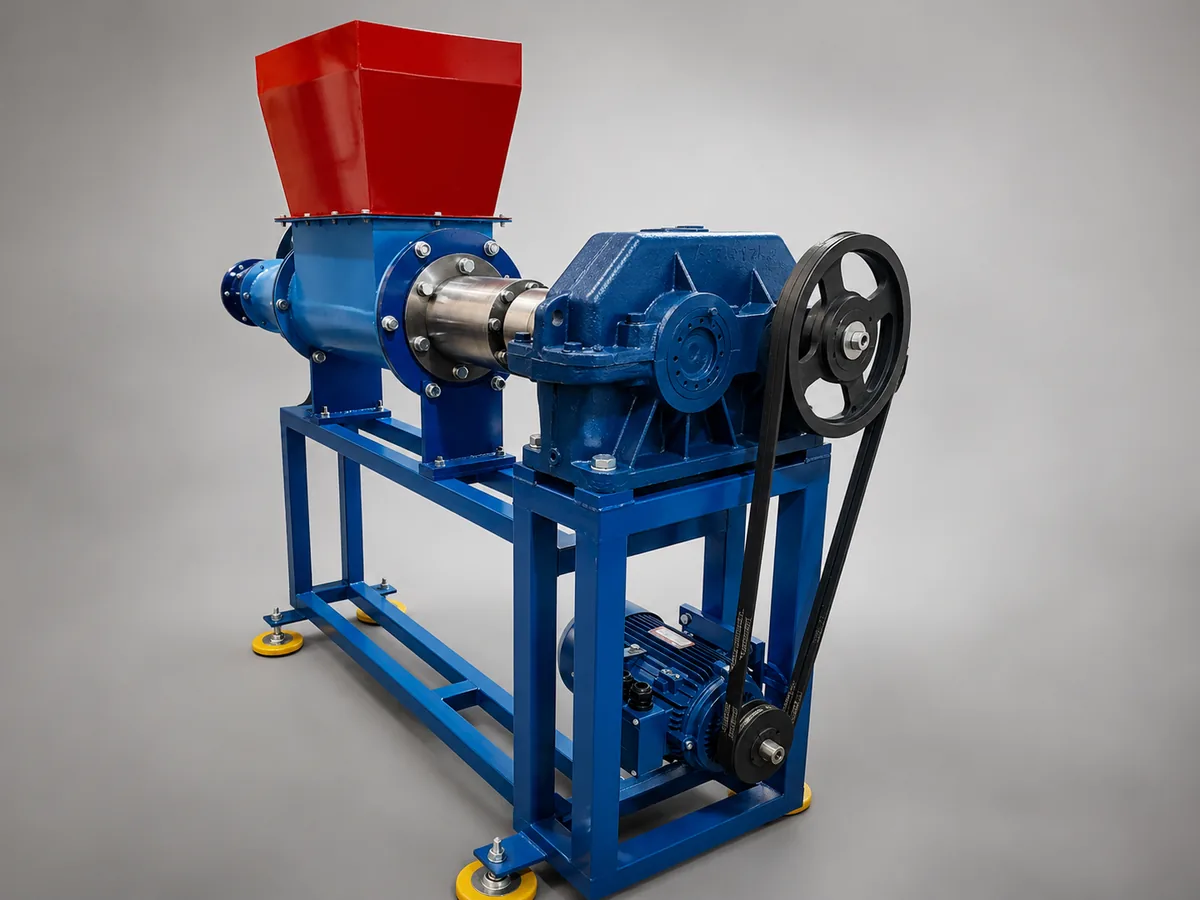
The lines are built on cascade, single-screw and twin-screw extruders. Pellet quality depends on the right choice of screw, motor power and L/D ratio, and on melt degassing and filtration.
Screw and motor power
The screw geometry must match the feedstock. Film and yarn have a low bulk density, and the feed zone must be able to take in bulky material. Rigid feedstock feeds more easily but needs a different compression profile. Motor power is selected for the output and the screw, with a margin: if power is short, the extruder cannot hold its rated output as soon as filter resistance rises or the feedstock changes.
L/D ratio
L/D is the ratio of the screw’s working length to its diameter. The longer the screw, the more time the polymer has to melt and homogenize, and the easier it is to fit a degassing zone. This is especially important for wet feedstock and printed film: the polymer must be fully melted before it reaches the vacuum zone.
Single-screw, twin-screw or cascade
A single-screw extruder is the basic option for polyolefins. A twin-screw extruder mixes the melt more intensively and is needed when additives are introduced or filled materials are processed. A cascade is two extruders installed in series: between the stages, the melt is additionally filtered and degassed, which gives a safety margin when running heavily contaminated film and printed film.
Melt degassing and filtration
Even after drying, recycled feedstock still contains moisture, gases and ink decomposition products. Vacuum degassing extracts them through a chamber above the extruder’s degassing zone. The vacuum pump is rated at 0.75 to 4 kW and removes up to 5% moisture vapor. Without degassing, the pellets contain moisture droplets and delamination, and their tensile and break strength is lower.
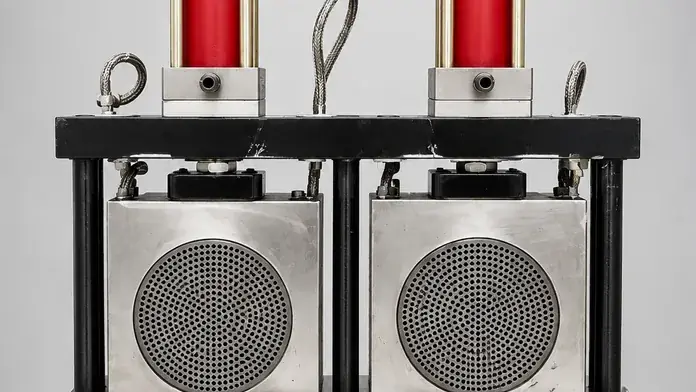
The filter catches whatever was not washed out: sand, paper, unmelted particles of other polymers. On contaminated feedstock, the screen clogs quickly, and manual screen changes turn into constant stops. The continuous slide-plate screen changer works with four filter elements 200–250 mm in diameter and swaps a clogged screen for a clean one in 2–3 seconds without interrupting melt flow. Windows of 200 mm are fitted to extruders with a screw diameter of 100–135 mm, and 250 mm windows to extruders with 135–160 mm screws.
Water-ring or strand pelletizing
Himmash installs vertical and horizontal water-ring pelletizing heads and, for high-MFI polymers, strand pelletizing heads. MFI (melt flow index) shows how fluid the melt is: the higher it is, the more easily the polymer flows.
In water-ring pelletizing, also called hot die-face cutting, the knives cut the melt right at the die face, and the pellets immediately drop into a water ring where they cool. This requires a melt viscous enough for the pellet to hold its shape. A polymer that flows too easily sticks to the die plate and knives, and the pellets stick together. In strand pelletizing, the melt exits as strands, cools in a water bath and is cut once it is solid.
| Water-ring pelletizing | Strand pelletizing | |
|---|---|---|
| Where the polymer is cut | at the die face, in the melt | after the strand cools in the bath |
| Typical application | polyolefins: HDPE, LDPE, PP | high-MFI polymers |
| Layout | compact unit at the extruder outlet | cooling bath and a separate pelletizer |
| What to monitor | knife pressure and sharpening, die plate condition | strand breaks, bath water temperature |
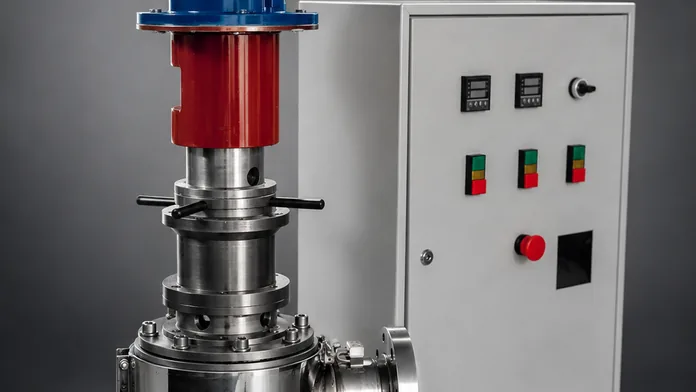
The hot die-face pelletizing head is rated for up to 400 kg/h, and its cutter shaft speed is adjustable up to 2,800 rpm. The set includes a cooler, a control panel with temperature controllers, heaters and a spare parts kit. A clean cut and consistent pellet size depend on the die plates and knives: die holes are 1.8 to 4.5 mm in diameter, the number of holes ranges from 26 to 120, and cutting units come with two, three or four knives.
What data to send an engineer to size the line
The more accurate the input data, the fewer iterations in the calculation. The minimum set:
- polymer and feedstock form: film, stretch film, big-bag (FIBC) yarn, bags, rigid waste; for a mix, the approximate ratio;
- feedstock origin: production scrap, agricultural film, MSW, packaging;
- what the feedstock is contaminated with and how heavily: sand, soil, organic matter, labels, metal;
- photos of the feedstock: a general view and a close-up;
- required pellet output in kg/h and the number of shifts;
- end product: flakes or pellets, and for what application;
- existing equipment, if any: extruder make and model, screw diameter, whether degassing and a filter are fitted;
- site: shop dimensions, available electrical power, water supply and wastewater discharge conditions;
- city, to calculate delivery.
Based on this data, Himmash engineers analyze the composition of your waste, your volumes and existing equipment free of charge and draft a preliminary line concept.
The order of decisions is simple: first the feedstock and the end product, then washing sized for the actual contamination, then the extruder with degassing and filtration, and only after that the pelletizing method. A mistake at the first step cannot be fixed with an expensive extruder: poorly washed feedstock will give dirty pellets on any equipment.