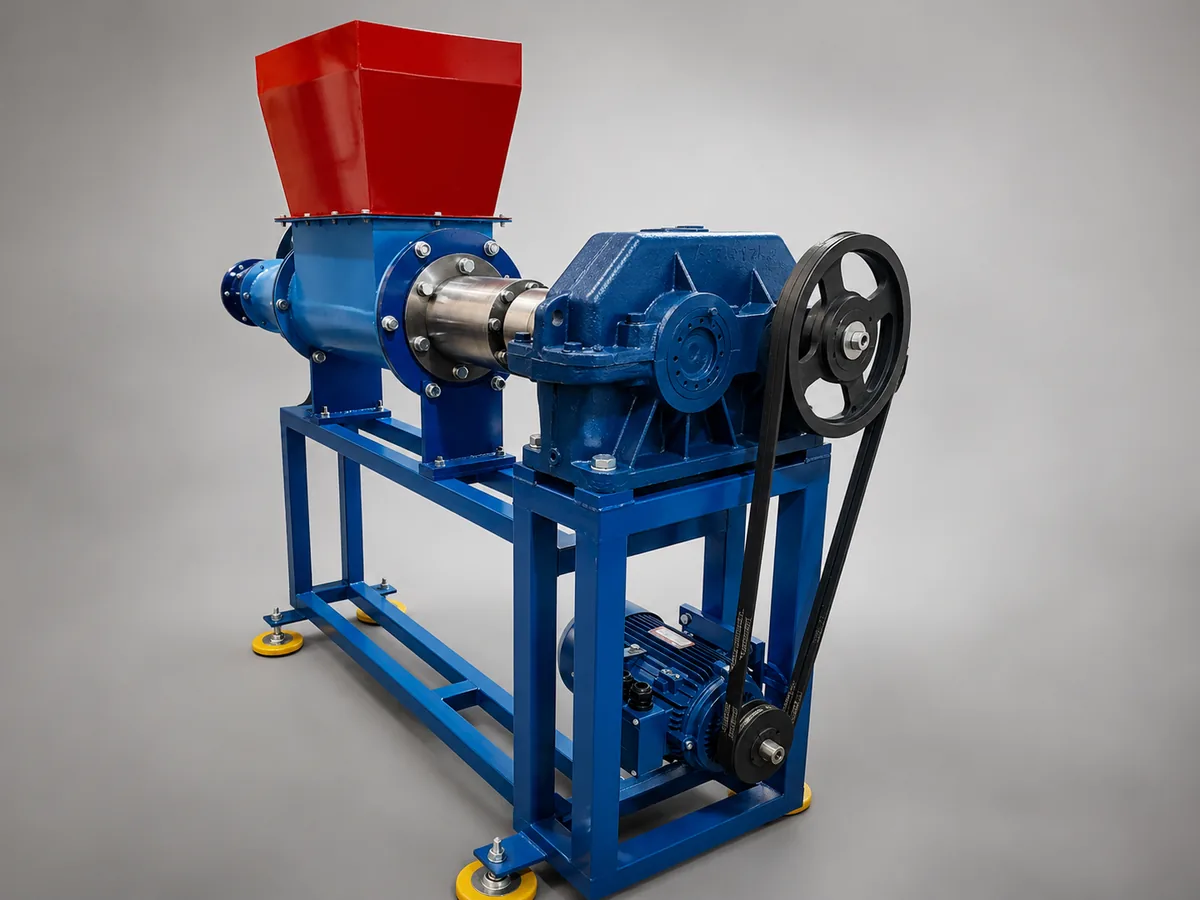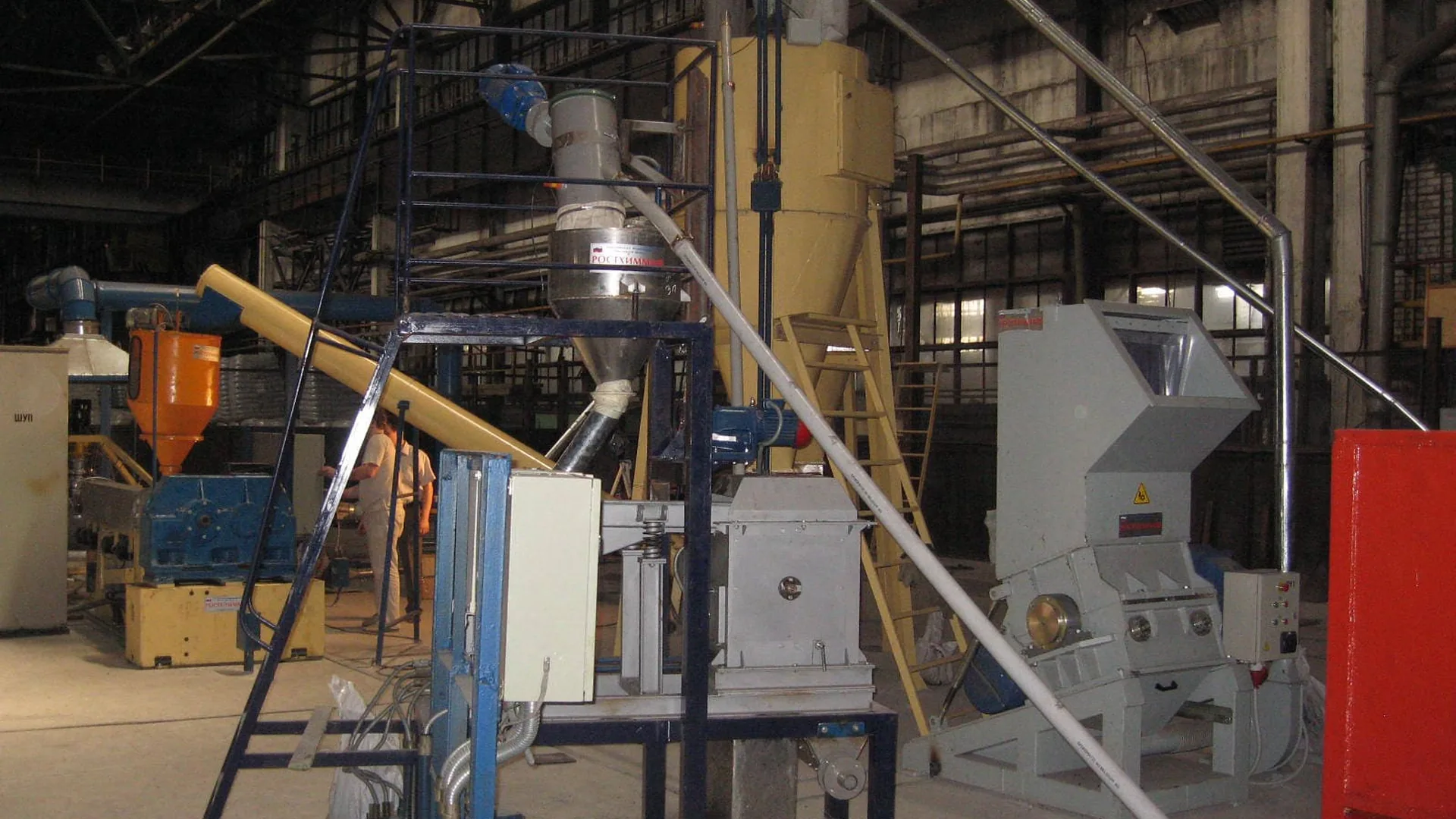
Washing is the key part of a recycling line for post-consumer plastics: pellet quality depends on it more than on anything else. The extruder and the melt filter cannot fix what was not washed out at the start: sand and organic matter will reach the filter screen and end up in the finished product. Let’s look at which units make up a washing line, what happens at each stage and how the units are matched to each other.
What a plastic washing line consists of
The classic layout for contaminated film, big-bag (FIBC) yarn and rigid waste looks like this:
- Shredding. A shredder or crusher reduces the feedstock to the working fraction.
- Primary washing. A flotation washer separates sand, stones and heavy contaminants.
- Secondary washing. A friction washer cleans the material by friction in hot water with detergents.
- Dewatering. A centrifuge mechanically removes water down to 3–5% residual moisture.
- Drying. A drum dryer or a vertical gravity dryer removes the remaining moisture.
- Water treatment. The wastewater is treated and returned to the cycle.
This is a typical layout. The set and order of washing units are chosen for the specific feedstock: in other lines, such as the KPTBO-300 complex, the number of stages and their sequence differ. The machine figures below refer to their catalogue versions; within complete systems, units may be supplied in other versions with different output and power.
The shredding fraction is set by what the washing units can handle. Himmash friction washers and centrifuges accept film up to 50 mm, PP yarn up to 100 mm and thick-walled plastics up to 30 mm.
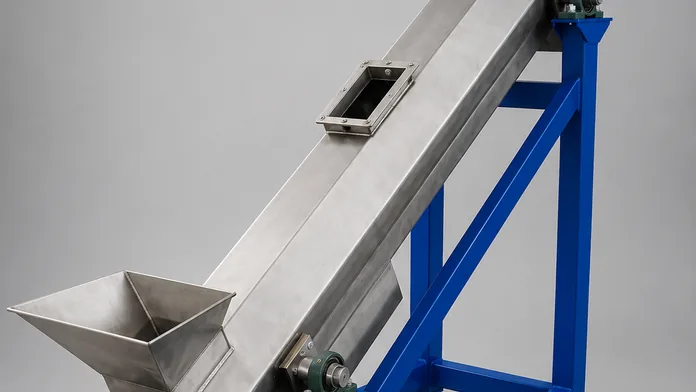
The units are matched not only by fraction but also by output: the line runs at the speed of its slowest unit. Between the units, material is usually moved by screw conveyors, and dry flakes by pneumatic conveying.
Flotation washer: primary washing of heavily contaminated feedstock
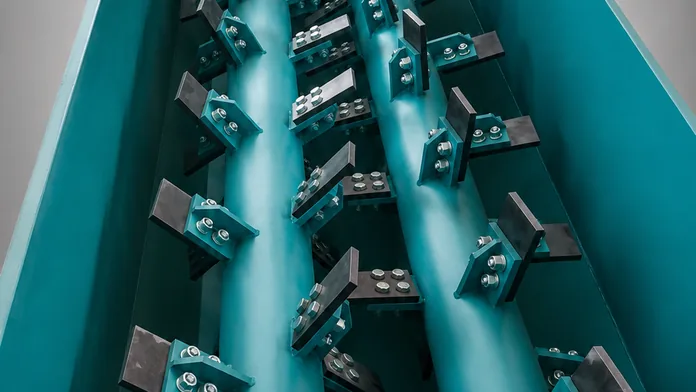
After the shredder or crusher, the material enters the tank of the flotation washer. Longitudinal paddle shafts mix it intensively, washing and knocking off dirt, stones, sand and heavy foreign matter. Particles with a specific gravity above 1, that is, heavier than water, sink to the bottom of the tank and are removed periodically. Polyethylene and polypropylene are lighter than water, so they stay afloat and move on. For mixed feedstock, this is an extra benefit: heavier polymers such as PVC and PET sink to the bottom along with the dirt.
Flotation is coarse cleaning. Its job is to remove the bulk of the dirt and take load off the following stages, so that the friction washer works with pre-washed material rather than with sand. Sand is abrasive: if a lot of it reaches the friction washer, it speeds up wear of the rotor blades and the screen and contaminates the water faster. The Himmash machine is rated for up to 500 kg/h with an installed power of up to 5 kW; control is by inverter, from a control panel.
Friction washer: how film and big-bag yarn are washed
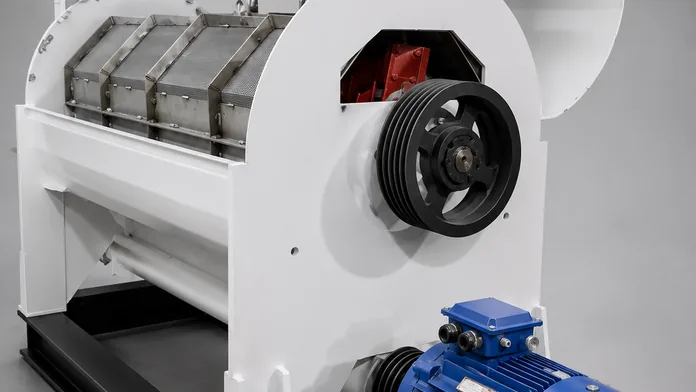
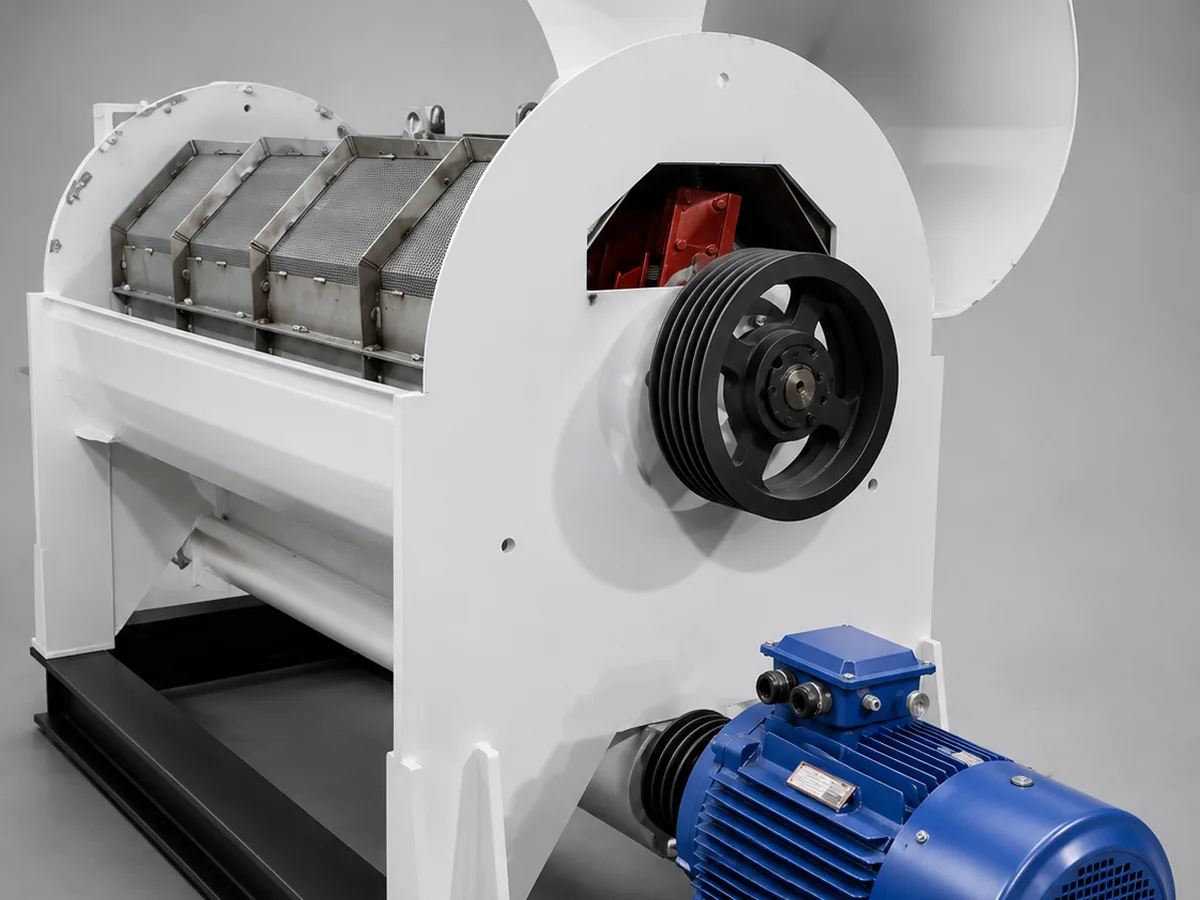
The rotor-type friction washer is the main washing unit of the line. The material is washed under a jet of heated water with detergents, by friction against the blades of a high-speed rotor. The housing is octagonal: its faces break up the flow and set the material in chaotic motion, so each fragment rubs against the blades and against other fragments many times. The used dirty water drains by gravity through the bottom screen.
Hot water and detergents remove what cannot be knocked off mechanically: greasy contamination, label adhesive residue, organic matter. Friction removes dirt stuck to the surface of the film and yarn. Detergents are dosed, which keeps under control both their consumption and the amount of surfactants that will later have to be removed from the water.
Washer output depends on the type of feedstock. Film and yarn are bulky and take up more space in the housing for the same weight, so the machine processes less of them than of rigid plastics and PET flakes.
| Parameter | Value |
|---|---|
| Output: film, yarn | up to 500 kg/h |
| Output: rigid plastics | up to 700 kg/h |
| Output: PET flakes | up to 900 kg/h |
| Installed power | up to 22 kW |
| Fragment size: film | up to 50 mm |
| Fragment size: PP yarn | up to 100 mm |
| Fragment size: thick-walled plastics, PET flakes | up to 30 mm |
The rotor runs at high speed, so the machine’s service life depends on shaft balancing and the bearing unit. Himmash manufactures friction washer shafts and centrifuge rotors with high-precision dynamic balancing, blade liners made of heat-treated high-strength steel, and liners fastened with stainless steel hardware.
Centrifuge: dewatering plastics to 3–5% moisture
After washing, the material still holds a lot of water. Removing it mechanically is cheaper than evaporating it, so a centrifuge is installed between the washer and the dryer. Inside it, a bladed rotor spins: the material is thrown against the screen, the water passes through it, and the dewatered material is discharged from the machine. The drier the material at the outlet, the lower the load on the dryer and the lower the energy costs.
The Himmash centrifuge accepts film with moisture up to 17%, and PP yarn and thick-walled plastics with moisture up to 15%, and reduces moisture to 3–5%. The machine is self-discharging, and sludge is removed by a separate 1.5 kW screw.
| Parameter | Value |
|---|---|
| Output | up to 500 kg/h |
| Residual moisture | 3–5% |
| Working shaft length | at least 2,000 mm |
| Shaft speed | 1,500 rpm |
| Installed power | 37–55 kW |
| Start-up system | two-stage |
| Weight | up to 2,500 kg |
Drying after the centrifuge: drum or gravity dryer
The dryer type is chosen by the form of the feedstock. For thick-walled rigid plastics, drum dryers are used: the material tumbles in a rotating drum while hot air is blown through it. Film and big-bag yarn are light and tangle easily, so they are dried in vertical gravity dryers, where the material moves under its own weight while hot air is blown through it. Himmash provides dryer specifications on request.
Drying is not the last line of defense. The storage hopper in front of the extruder further dries the material with air flow, and the remaining moisture and gases are extracted from the melt by the extruder’s vacuum degassing.
Closed water loop: the T-5000 treatment system
A washing line constantly consumes water and discharges wastewater containing sand, suspended solids, fats, organic matter, surfactants from detergents and nanoplastics. Discharging such wastewater into the municipal sewer is restricted: the maximum permissible concentrations of pollutants are set by the Russian Rules for Cold Water Supply and Sanitation (Правила холодного водоснабжения и водоотведения).
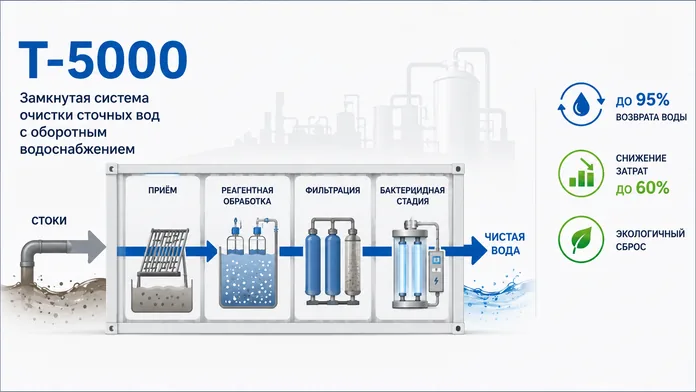
The T-5000 system is a closed-loop water system that treats the wastewater and returns the water to the production cycle up to 20 times. Its capacity is 3 to 10 m³/h. Treatment uses electroflotation, electrocoagulation, electrolysis, electrodialysis, sorption and mechanical filtration in two stages: one for water recycling and one for discharge to the sewer. The system is installed inside the shop or as a separate container unit; it operates at air temperatures from +5 to +45 °C, occupies 35 m² and is run by one person. Besides suspended solids and sand, the system removes petroleum products and fats, organic impurities, metal hydroxides, nanoplastics and surfactants from the water.
| Parameter | Inlet | After treatment |
|---|---|---|
| Suspended solids | up to 50,000 mg/L | less than 300 mg/L |
| Fats, petroleum products, oils | up to 5,000 mg/L | less than 0.1 mg/L |
| Organic matter | up to 5,000 mg/L | less than 300 mg/L |
| Surfactants | up to 3,000 mg/L | less than 0.5 mg/L |
| Sand, heavy metal oxides | up to 10,000 mg/L | 0.1–5.0 mg/L (zinc) |
| Nanoplastics | up to 10,000 mg/L | less than 100 mg/L |
| COD | up to 20,000 mg/L | 30–150 mg/L |
Size the washing line for the dirtiest feedstock you will actually have to process, not for a clean sample. The units must match in output and fraction: the Himmash flotation washer, the friction washer on film and the centrifuge are all rated for up to 500 kg/h, and the washer and the centrifuge accept the same fragment sizes. It makes sense to plan water treatment from the start, together with the washing section: its capacity is sized to the water consumption of the whole washing section.