Film, stretch film, bags and big-bag yarn are hard to feed into an extruder: they are light and bulky, so they do not flow by gravity from a regular hopper into the screw. The traditional solution is an agglomerator, which densifies the material into crumbs. The alternative is a screw feeder, or crammer, which force-feeds the material into the extruder feed zone. Let’s look at how it works, what you gain by dropping agglomeration, and where the limits of this solution are.
Why film cannot be gravity-fed into an extruder
Shredded film and yarn have a low bulk density. In the hopper, they form a loose, tangled mass, bridge over the throat and enter the screw unevenly. The extruder screw takes in little material per revolution and runs underloaded, and melt pressure fluctuates. As a result, output is below the rated value and pellet quality is inconsistent. Big-bag yarn is longer than film fragments and tangles even more.
There are two ways to solve this: densify the material in advance, which is agglomeration, or force-feed it into the extruder with a screw feeder.
How an agglomerator works and what agglomeration costs
An agglomerator is a drum with rotating knives. The knives cut the film, friction heats it until it softens, then it is abruptly cooled with water, and the mass breaks up into dense crumbs called agglomerate. A classic agglomerator works in batches and needs an operator, and its knives go blunt and need regular sharpening. Batch quality depends on how precisely the operator times the water injection: an underheated mass gives loose agglomerate, and an overheated one sinters into lumps.
In essence, agglomeration is a separate process step with its own costs and its own intermediate product. The agglomerate has to be produced, stored and fed into the extruder, and each such operation means equipment, people, electricity and time.
Screw feeder: how it feeds material into the extruder
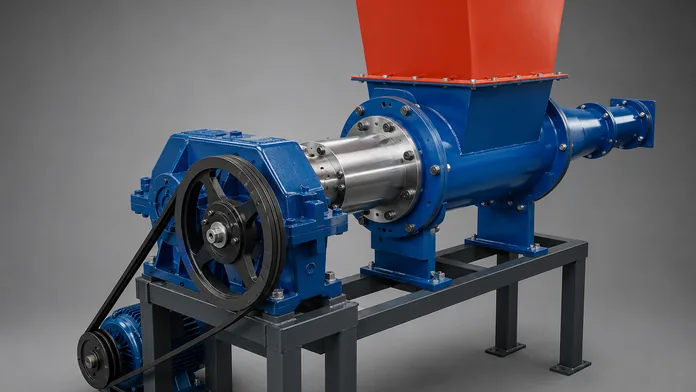
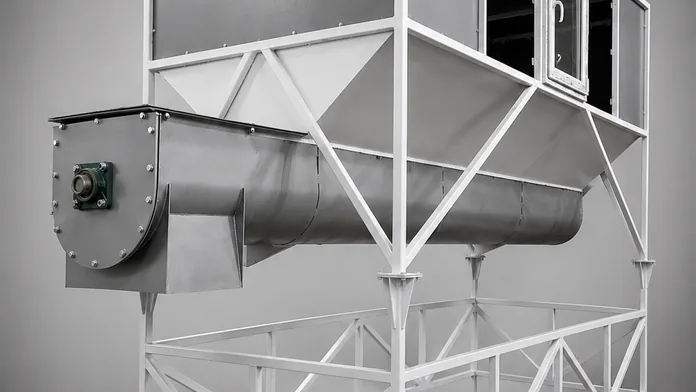
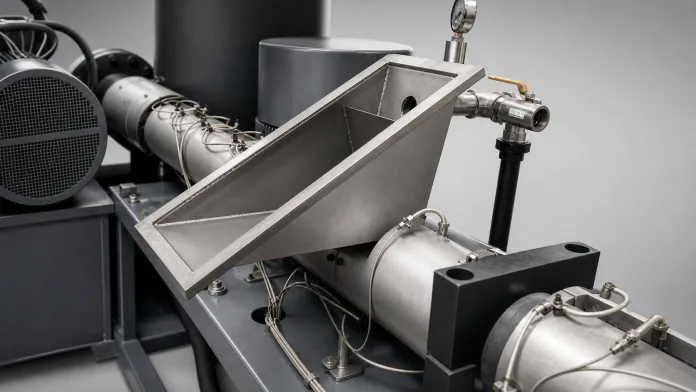
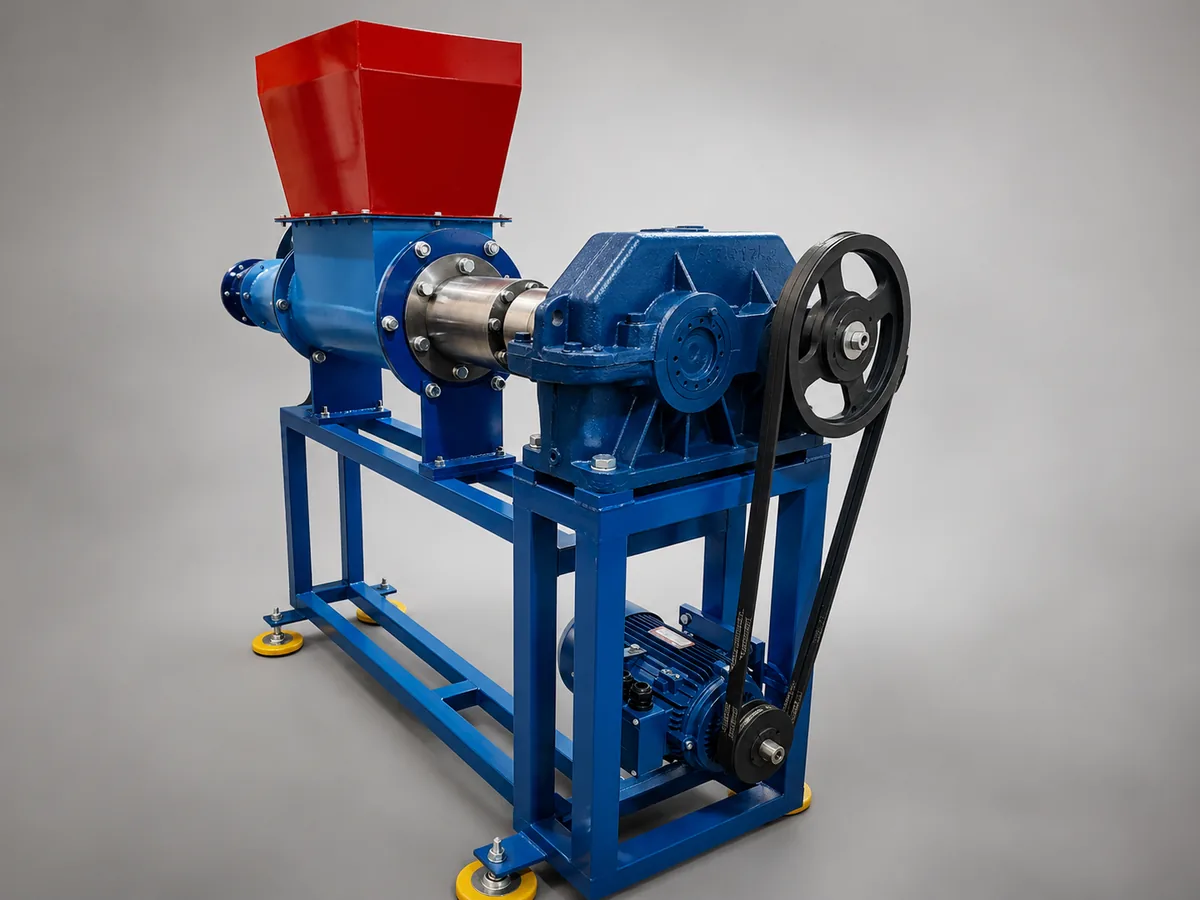
The screw feeder is mounted on the extruder feed zone. Material from the hopper drops onto the screw and is forced into the extruder throat. The screw compresses the material along the way, so it enters the extruder already dense, without prior agglomeration.
Why a conical screw
The conical shape compresses the material repeatedly. As the material moves toward the outlet, the free volume between the flights decreases, and the loose mass of film or yarn is gradually compacted. Along the way, air is squeezed out of it, and shredded film contains a lot of air. The extruder screw receives dense material and fills on every revolution instead of catching it in fits and starts.
Why a frequency inverter
The feeder motor is controlled by a frequency inverter. The feed rate can be adjusted and kept even to match the extruder load. If you feed more than the extruder can melt, the load on the drive and the pressure rise; if you feed less, the extruder is underloaded again. Frequency control lets you find the operating point and quickly readjust the feed when the feedstock changes, for example from film to yarn, without mechanical modifications. This is what keeps line operation and output stable.
| Parameter | Value |
|---|---|
| Output | up to 500 kg/h |
| Installed power | 5.5 kW |
| Control | inverter |
| Length × width × height | up to 3,000 × 1,000 × 1,400 mm |
| Weight | up to 200 kg |
Which feedstock and fragment sizes the feeder accepts
The feeder is designed for film, polypropylene big-bag (FIBC) yarn, bags and regrind. The main limitation is fragment size:
| Feedstock type | Fragment size |
|---|---|
| Film | up to 50 mm |
| PP yarn | up to 100 mm |
| Thick-walled plastics (regrind) | up to 30 mm |
The three feedstock types load the feeder differently. Film is light and flat and compresses well, so the main task is to compact the bulky mass. PP yarn is longer than film fragments and tangles, and the feeder pulls it into the extruder by force, keeping it from bridging in the hopper. Regrind from thick-walled plastics is already fairly dense; here the feeder mainly evens out the feed, especially when the regrind comes mixed with film.
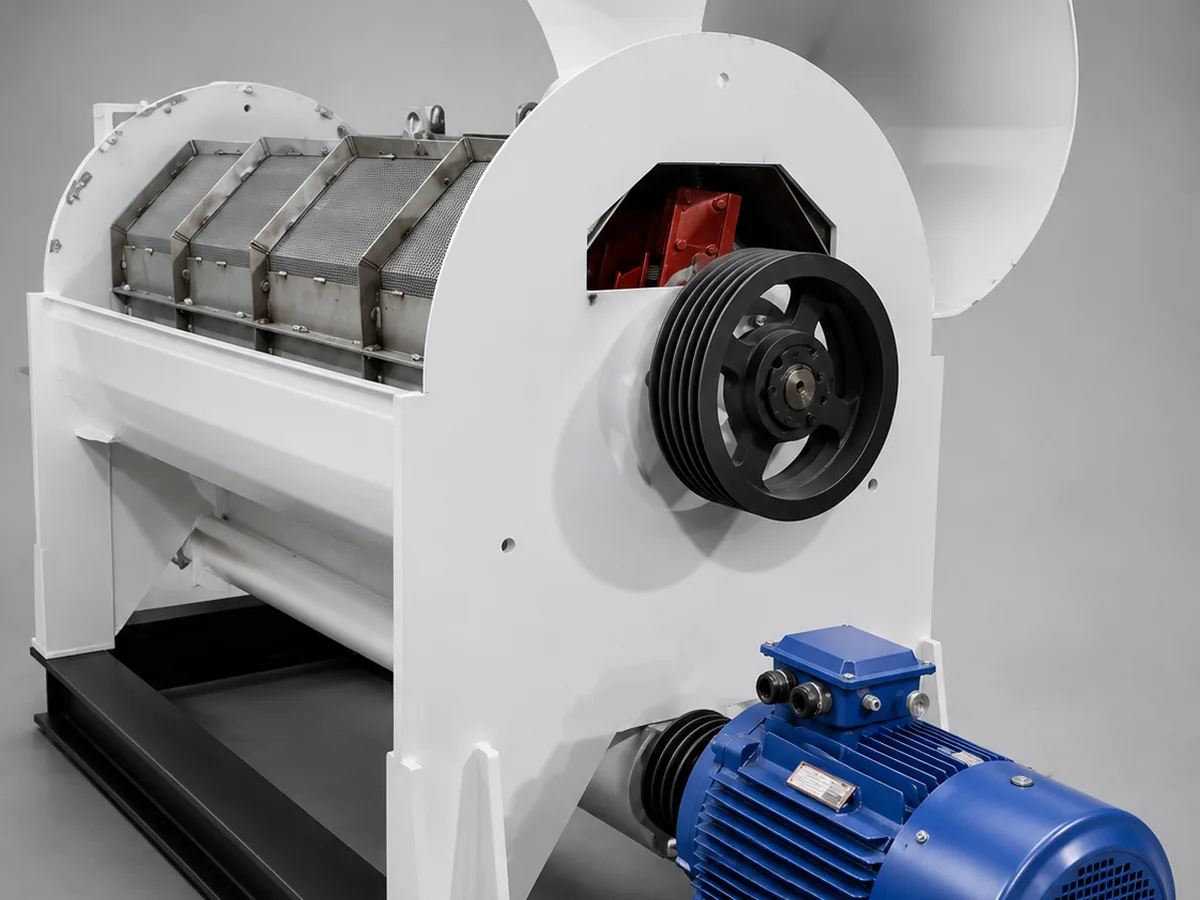
These sizes match the permissible fragment sizes for the Himmash friction washer and centrifuge, so material from the washing line goes into the feeder without re-shredding.
Moisture is a separate issue. The feeder does not dry the material, so the water must be removed by the washing line: the centrifuge brings residual moisture down to 3–5%, followed by the dryer. The remaining moisture vapor and gases are removed from the melt by the extruder’s vacuum degassing, which is designed to remove up to 5% moisture vapor.
Limitations to be aware of
- Fragments larger than the permissible sizes must be shredded further in advance.
- Stones, sand and metal must be removed earlier, in flotation and washing: anything that gets into the feeder will end up in the extruder and on the filter screen.
- The feeder’s output is up to 500 kg/h, but the actual feed rate is set to match the extruder: the feeder must not feed more than the extruder can process.
- The feeder runs evenly only if material arrives evenly, so it needs a storage hopper with metered discharge in front of it.
What you gain by dropping agglomeration
The main advantage of the feeder is that the recycler skips the agglomeration step and, with it, a whole group of costs:
- the cost of the agglomerator itself;
- knife sharpening;
- feedstock drying;
- maintenance;
- operator wages and taxes;
- electricity: instead of the agglomerator drive, the 5.5 kW feeder motor is running.
Besides the direct savings, the line has one process step fewer. After washing and drying, the material goes into the extruder in a continuous flow, without intermediate storage of agglomerate. The polymer also avoids additional heating to the softening point in the agglomerator, which means one heat cycle fewer. For an operating plant, it also frees up floor space: there is no need for room for the agglomerator or for an agglomerate storage area.
How to integrate a screw feeder into the line
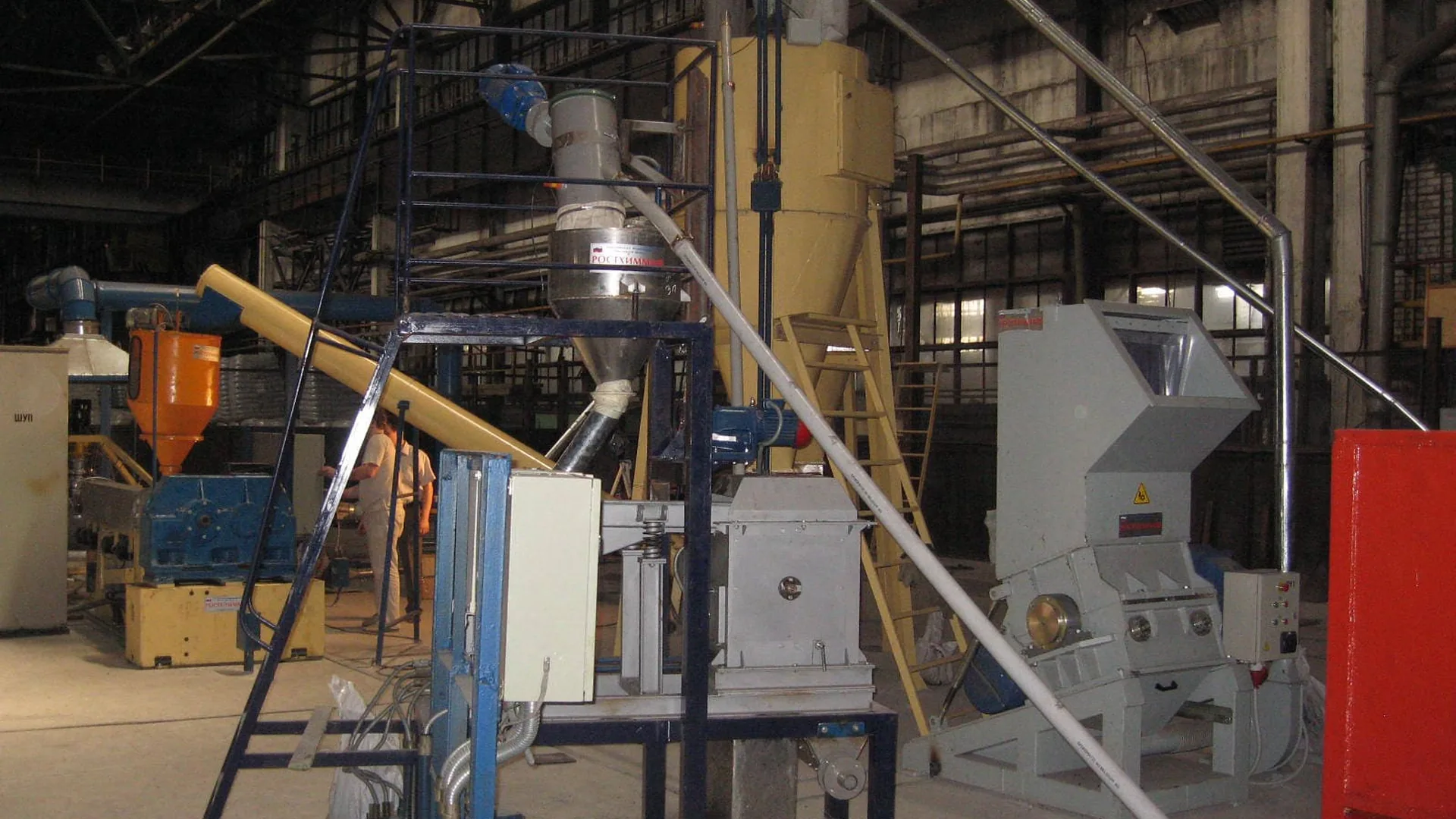
A typical sequence looks like this: dryer → pneumatic conveying → storage hopper with screw doser → screw feeder → extruder with vacuum degassing → melt filter → pelletizing head.
Material can be moved from the dryer to the hopper without manual handling. The contact fan of the pneumatic conveying system takes in the material through the impeller and conveys film and big-bag yarn of 50–100 mm over a distance of 5 to 50 m.
The storage hopper, with a volume of 5–10 m³, receives material from pneumatic conveying and feeds it to the feeder through a dosing screw 200–300 mm in diameter; the operator sets the discharge rate. The hopper acts as a buffer between washing and the extruder, keeps the material from bridging and further dries it with air flow.
If the line already runs with an agglomerator, the question is how to fit the feeder to the feed zone of the existing extruder. To select a feeder, the following is needed:
- extruder make and model, screw diameter;
- feed throat dimensions;
- feedstock type and fragment size after shredding;
- required output in kg/h;
- how the material is fed now: manually, by conveyor or by pneumatic conveying.
If the agglomerator in your line is needed only to get film or yarn into the extruder, a screw feeder does the job more simply, without a separate process step, an operator or knife sharpening. The conditions for this are clear: fragments within 50 mm for film, 100 mm for yarn and 30 mm for regrind, good washing and drying before the extruder, and melt degassing.